Browse Items (7 total)
- Collection: Ceramics
Sort by:
Attic Red-figure Epinetron

This epinetron, a semi-cylindrical clay object used for carding wool, is attributed to the Eretria Painter. On the long sides, scenes of the mythical wedding of Alkestis. One side shows Alkestis the day after the wedding, epaulia in Greek, with Theo,…
Attic Red-figure Squat Lekythos

Painted by Douris, this lekythos, an oil flask used for baths and funerary offerings, depicts a youth being pursued by two Erotes. According to the inscription, the vase belonged to someone named Asopodorus. The inclusion of the name of the vase’s…
Boeotian Red-figure Calyx Krater with Lid

Kraters such as this one were used to mix wine with water, often for symposiums where they served as conversation starters and status symbols. This krater depicts Eos, the goddess of dawn, preceded by Hermes who shows her the way, alluding to the…
Oil Lamp
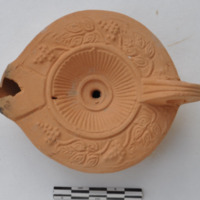
Made with unglazed, tan clay, this lamp shows evidence of burning around its nozzle. Along the rim, raised designs circle the central hole where the oil once entered the vessel. At its base, the hand-written signature (Ολυμπια/νου) identifies the…
Oil Lamp
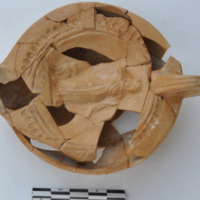
Based on the burning around the nozzle of its glazed, tan clay, this oil lamp served a highly functional role in the ancient world. Along its face, Artemis, who is dressed in a tunic, raises her bow next to an animal. The signature at its base…
Semi-globular Cup
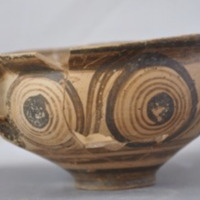
This cup is made of yellow clay and slip with brown paint and added white. Restored from 27 pieces, it’s mostly complete besides a few rim and body sherds. The cup is semi-globular shaped with a long, everted rim, one vertical strap handle attached…
Vapheio Cup
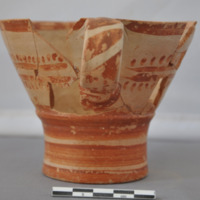
Decorated by bands of brown paint on a tan clay and slip body, this vapheio style cup is one of two found in the same tomb. It’s been restored from many pieces but is still missing some sherds from its body and rim. The cup has a deep, semi-globular…