Bifolium from a Qur’an
Dublin Core
Title
Bifolium from a Qur’an
Subject
Bifolium that was once part of a multivolume Qur’an manuscript
Description
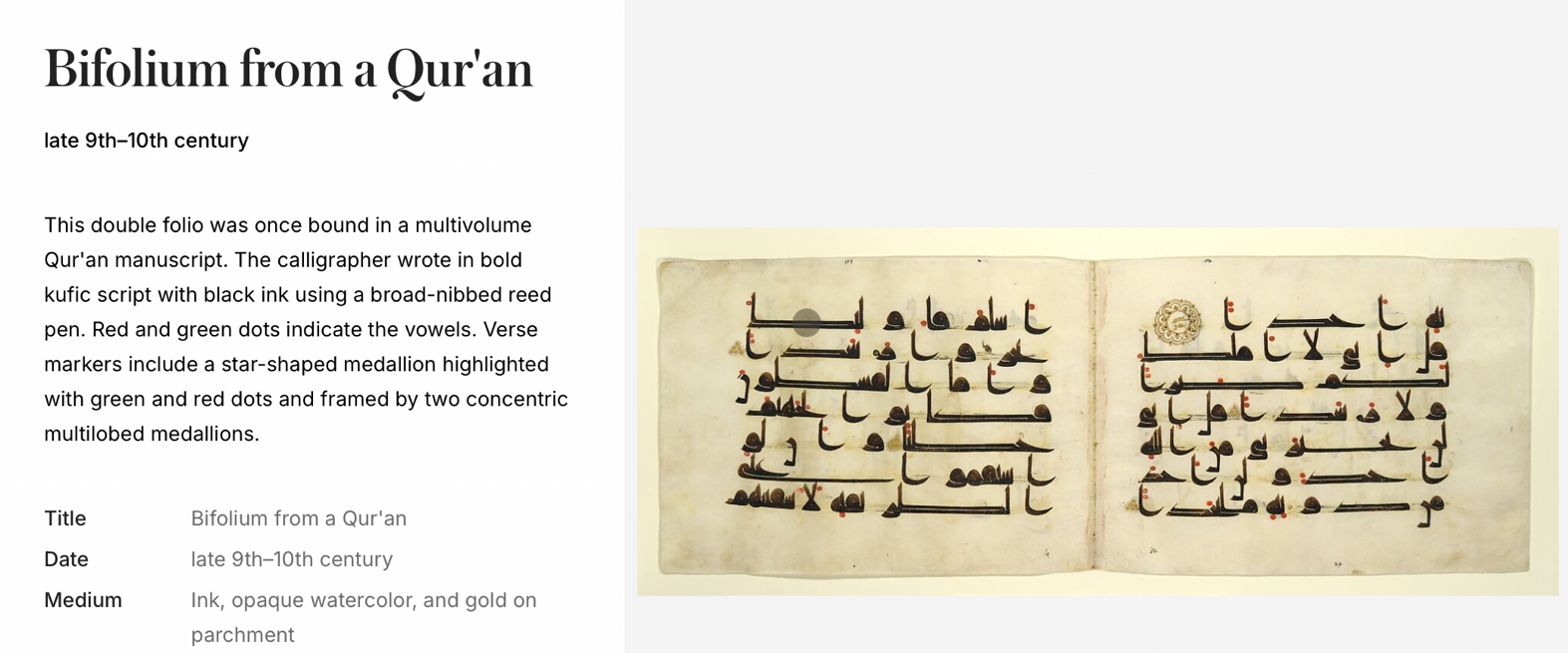
The calligrapher wrote this in kufic script very boldly in black ink with a broad-nibbed reed pen. This was written in the kufic script style because it is very clear and angular to make it as understandable to people as possible. This type of calligraphy and precision demonstrates the efforts to preserve the Qur’an as much as possible in the early Islamic period. These efforts to preserve the Qur’an indicate great religious devotion and expression by making these manuscripts into calligraphy. You may notice that in sacred texts, there are no images or figures present, this is due to aniconism, which is the prohibition or avoidance of images, drawings, or figures in sacred texts to prevent readers from idolizing or worshiping any figure other than God. Instead, people turned to calligraphy and experimenting with geometric shapes instead for decorative and artistic purposes. This period spikes the influence of creativity and innovation, promoting the creation of more art and cultural expression.
Source
Ekhtiar, Maryam. How to Read Islamic Calligraphy. New York: The Metropolitan Museum of Art, 2018. no. 2, pp. 36–37, ill.
Date
9th-10th Century
Location: Either the Central Islamic Lands or North Africa
Location: Either the Central Islamic Lands or North Africa
Citation
“Bifolium from a Qur’an,” Etemadi, accessed November 16, 2026, https://coloradocollege.website/aetemadi/items/show/17.