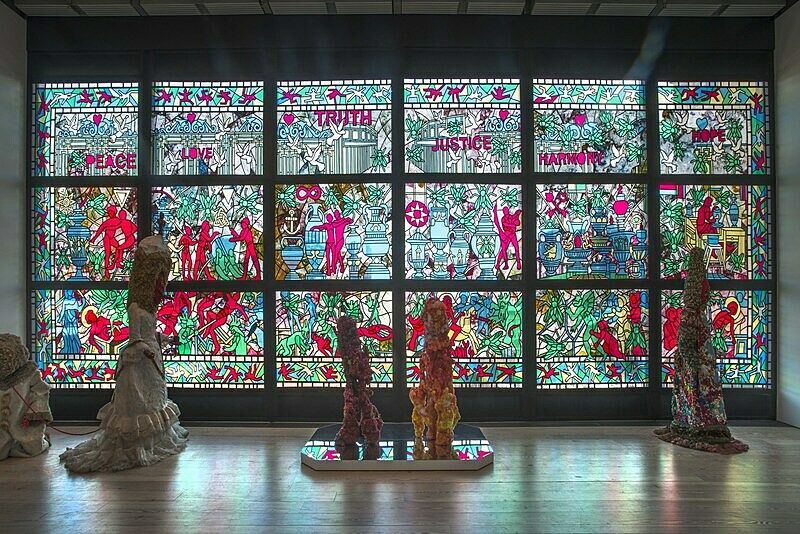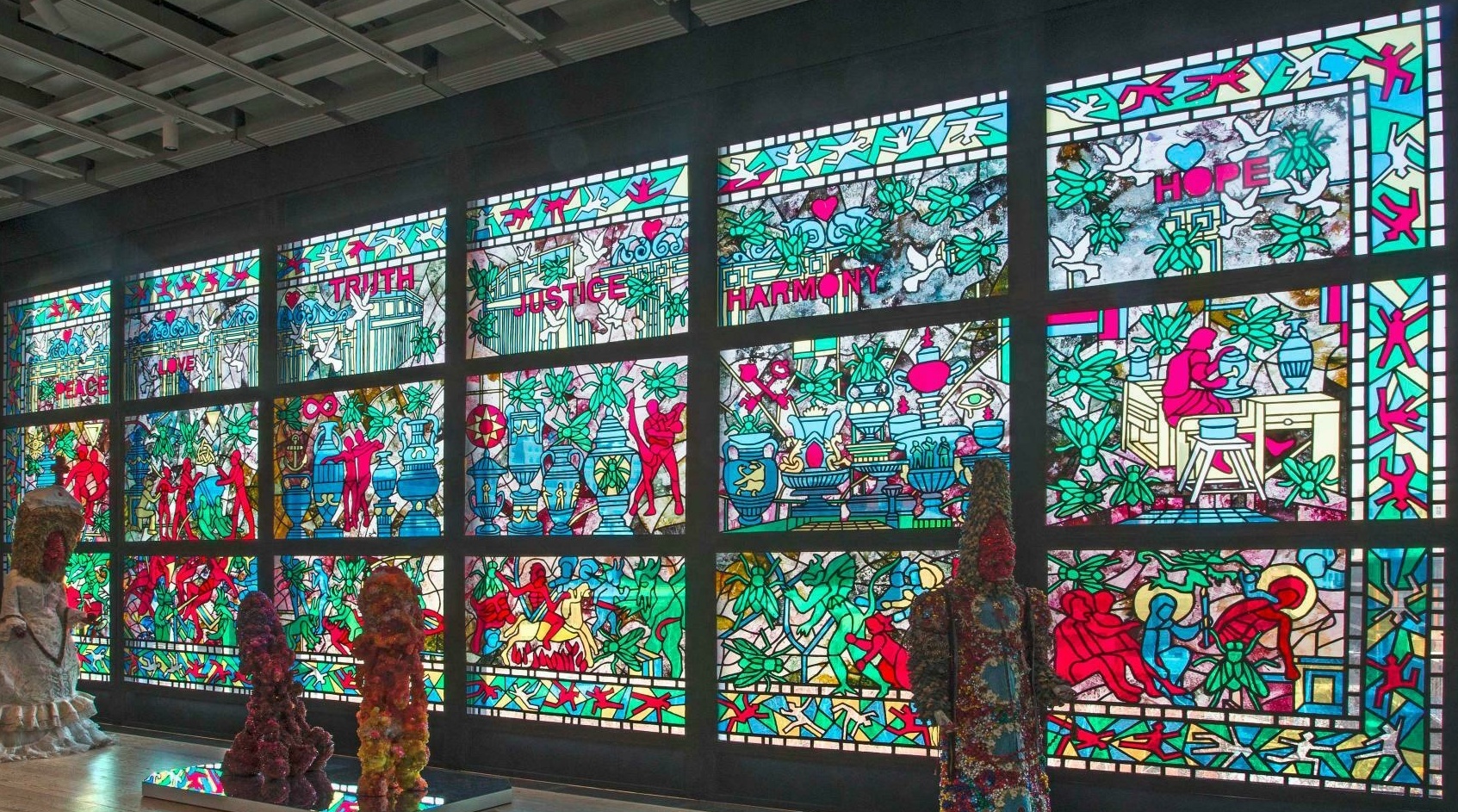
Beginning & the end neither & the otherwise betwixt & between the end is the beginning & the end, 2016
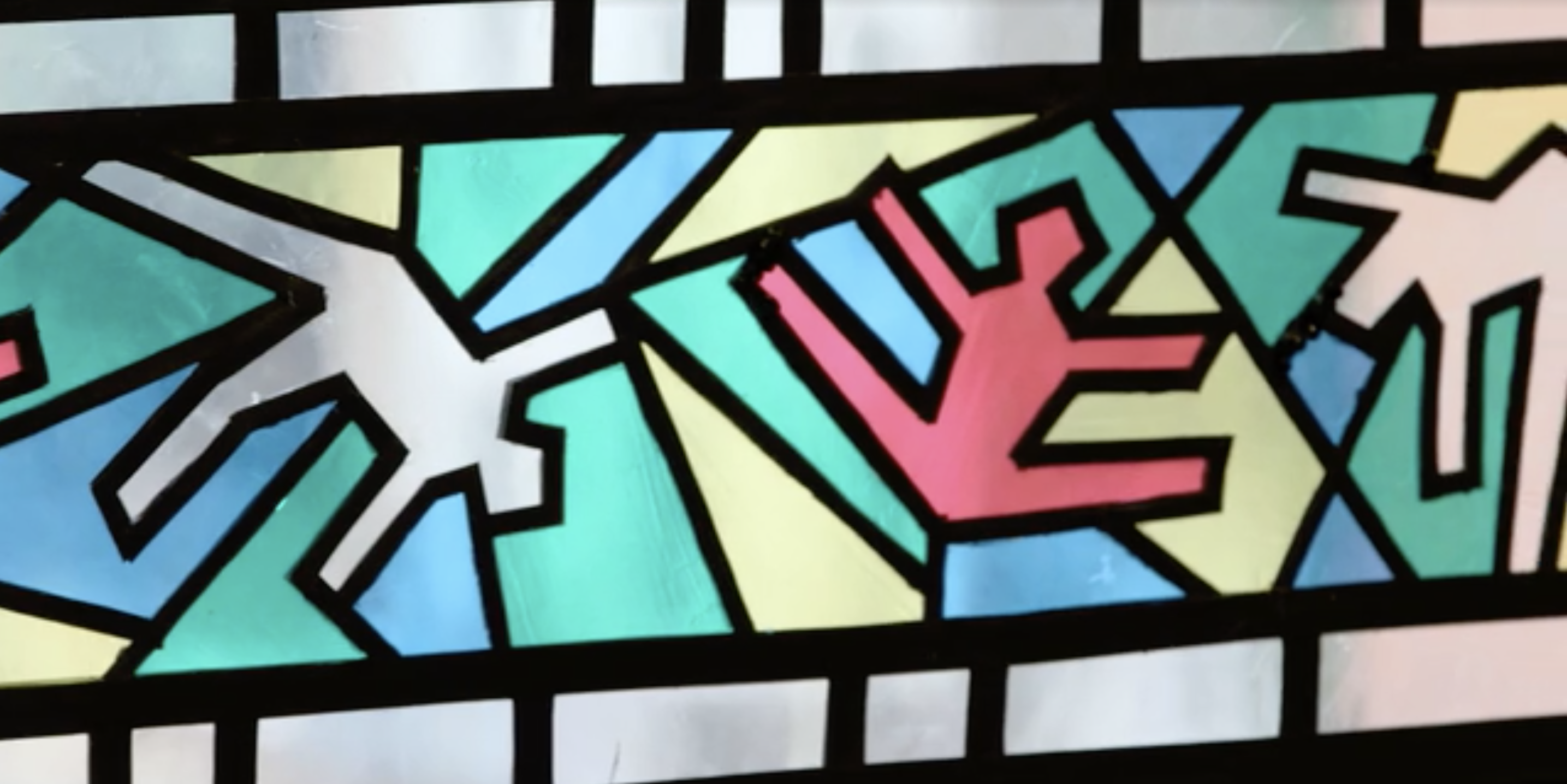
Gaffer’s tape on paper with sheets of colored acetate hot glued over it and some beads on top, 16 feet tall (6.5 stop signs) x 40 feet wide (16 stop signs)
Storytelling
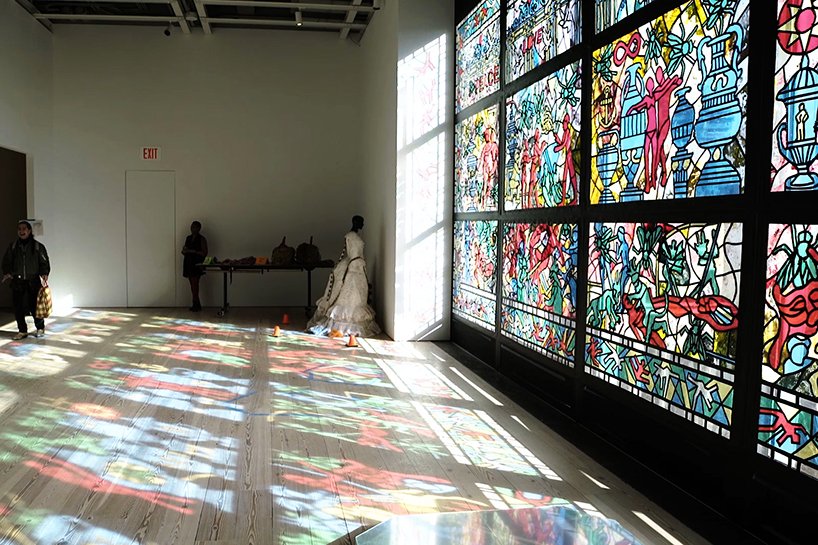
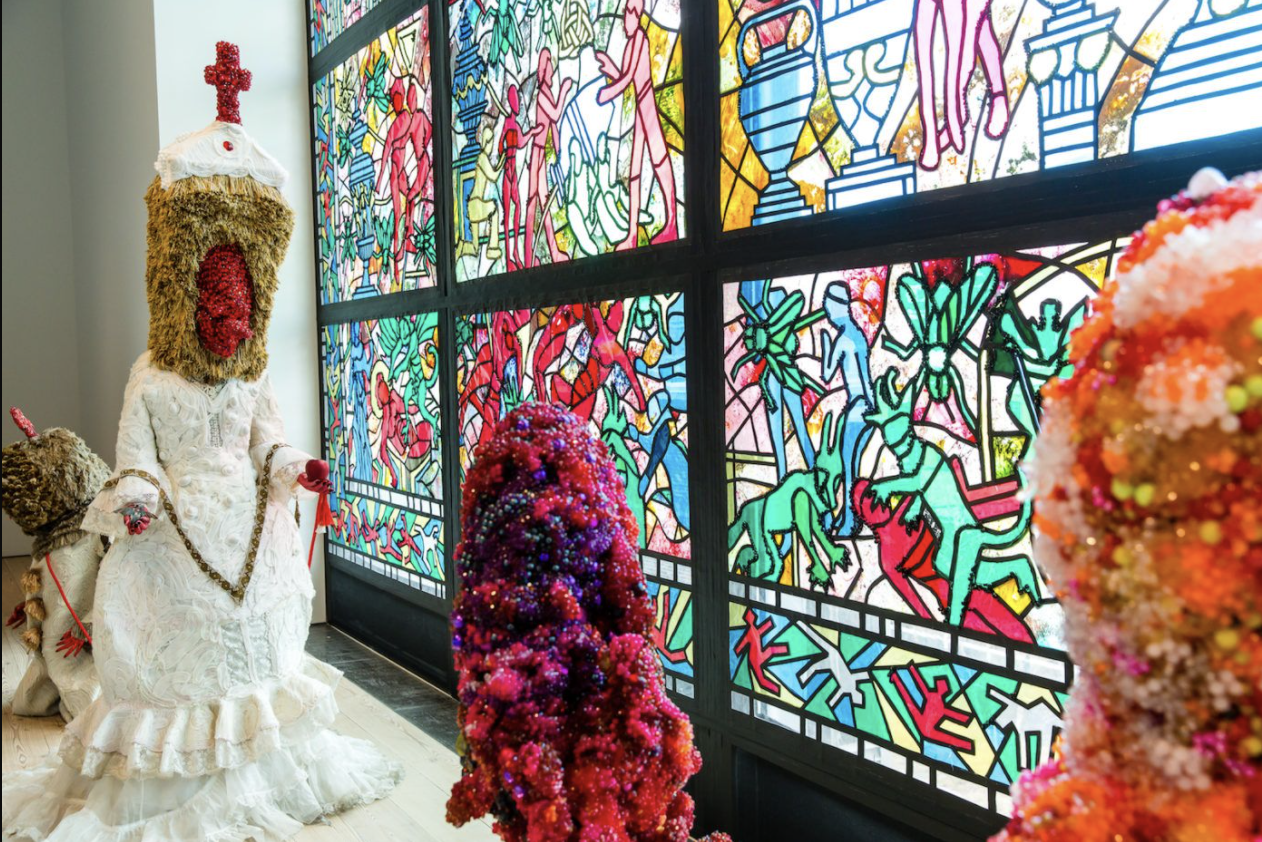
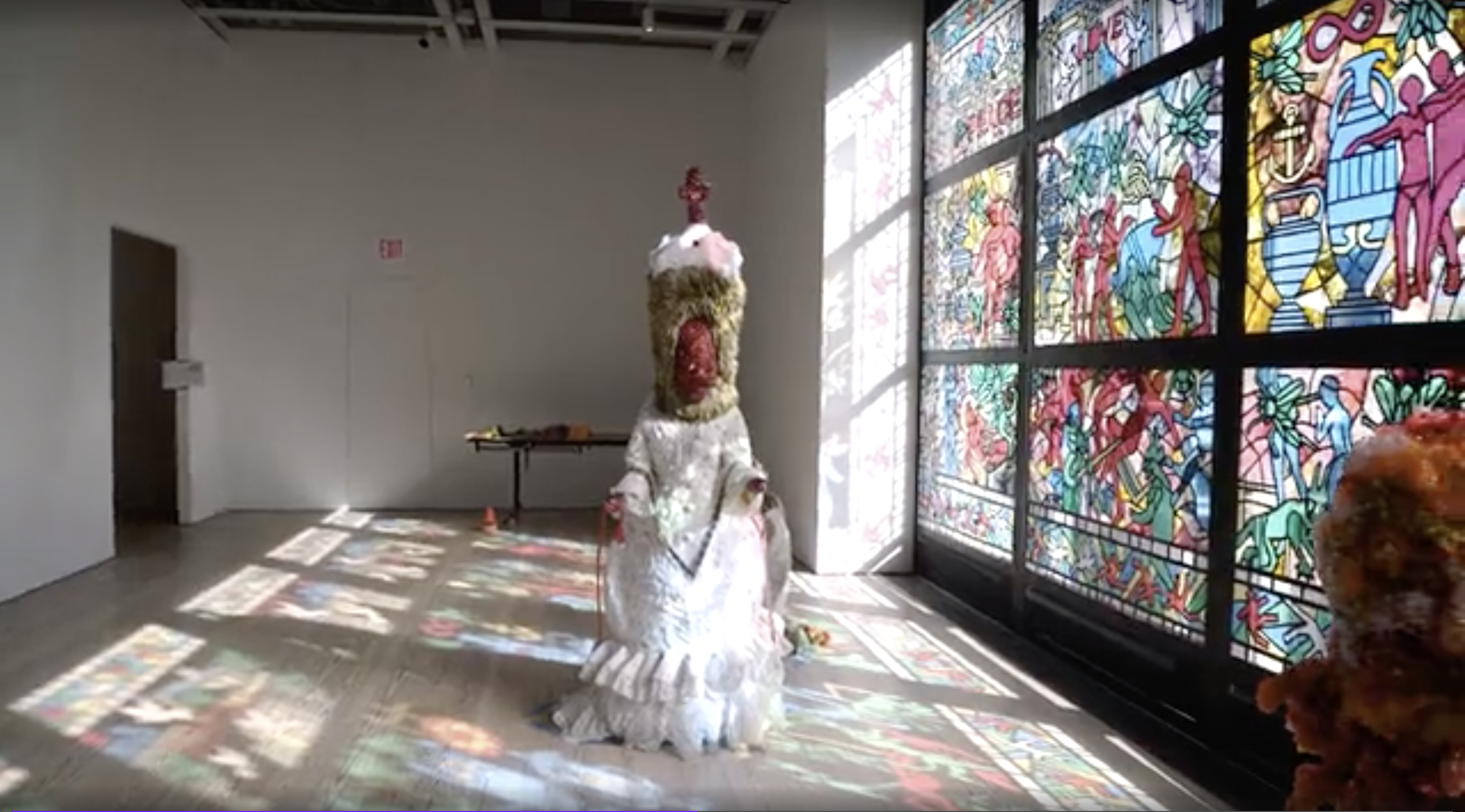
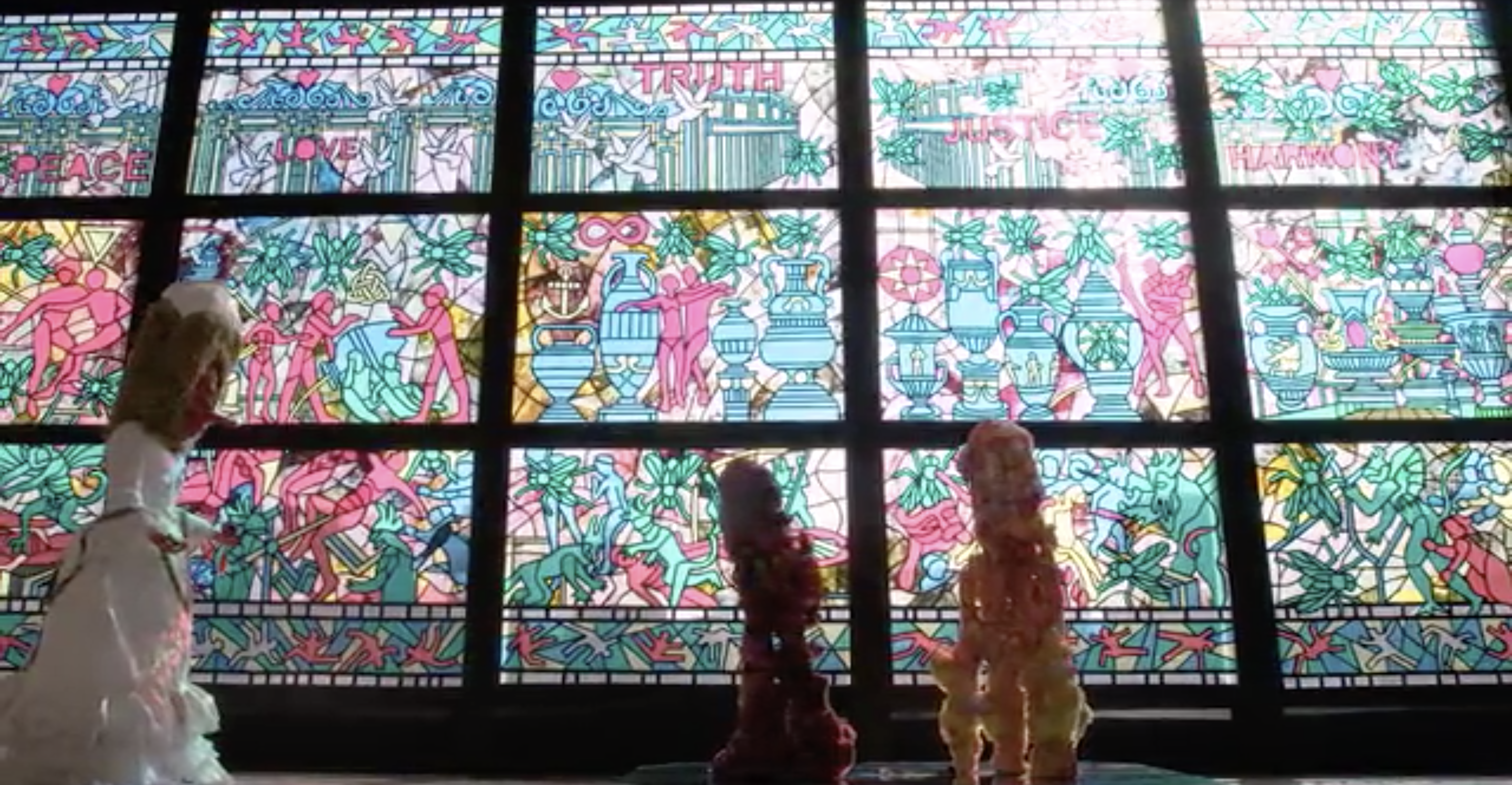
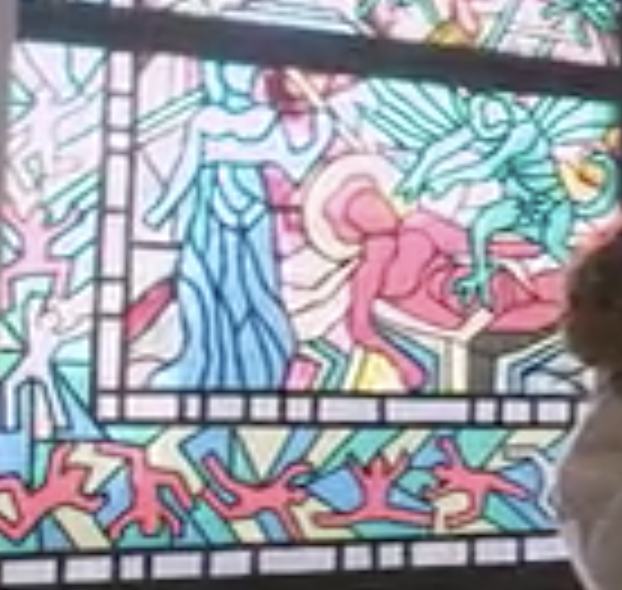
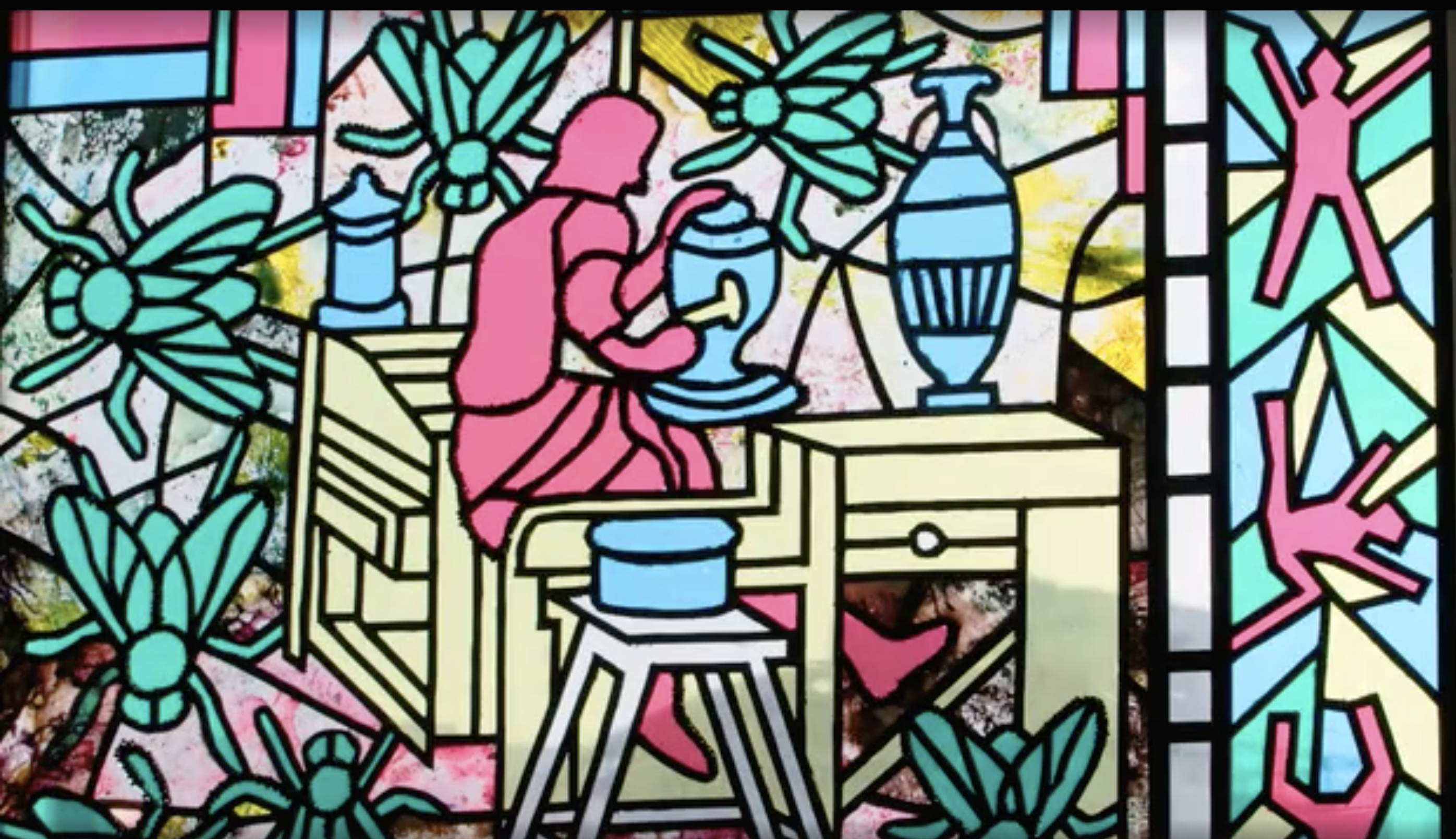
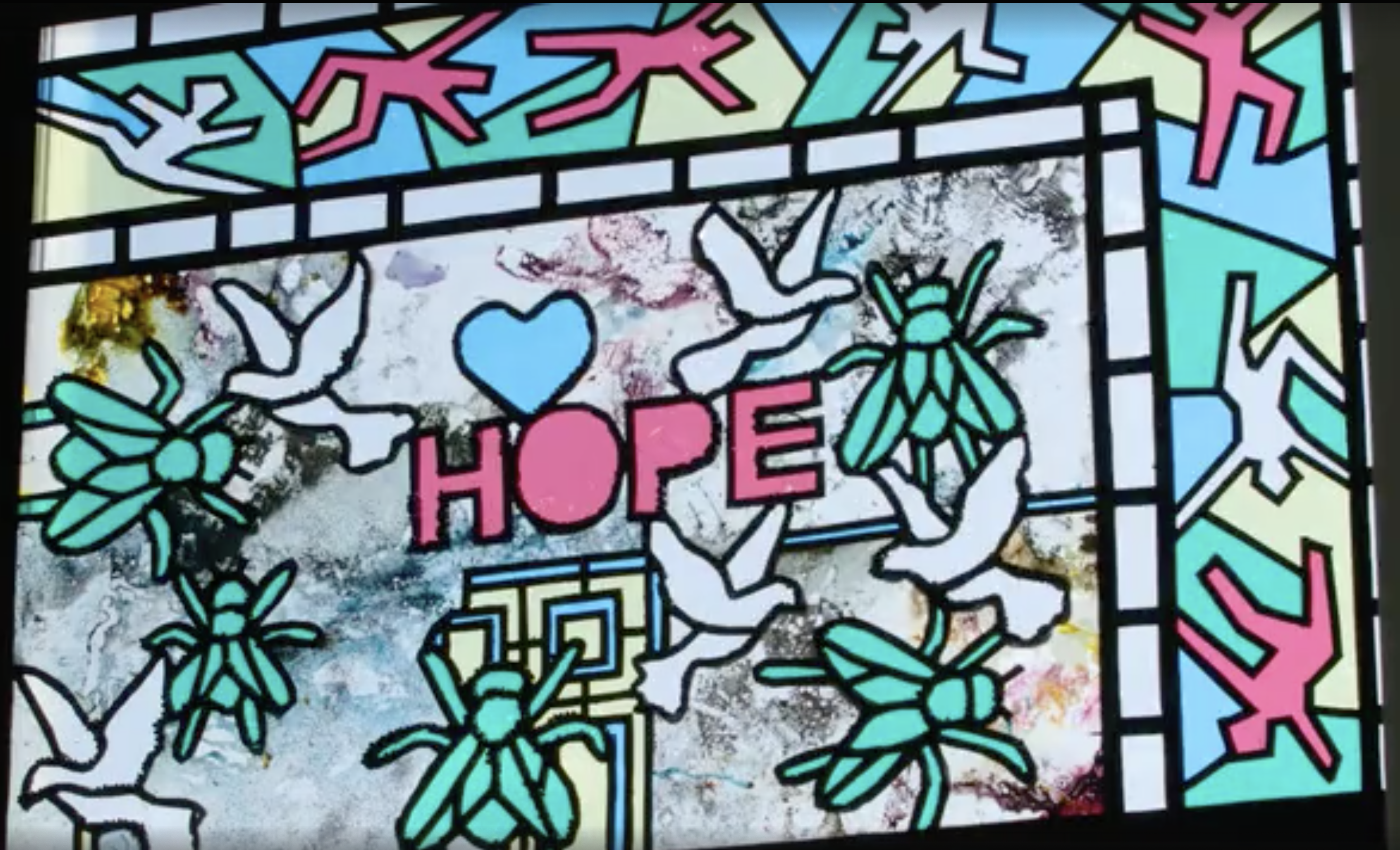
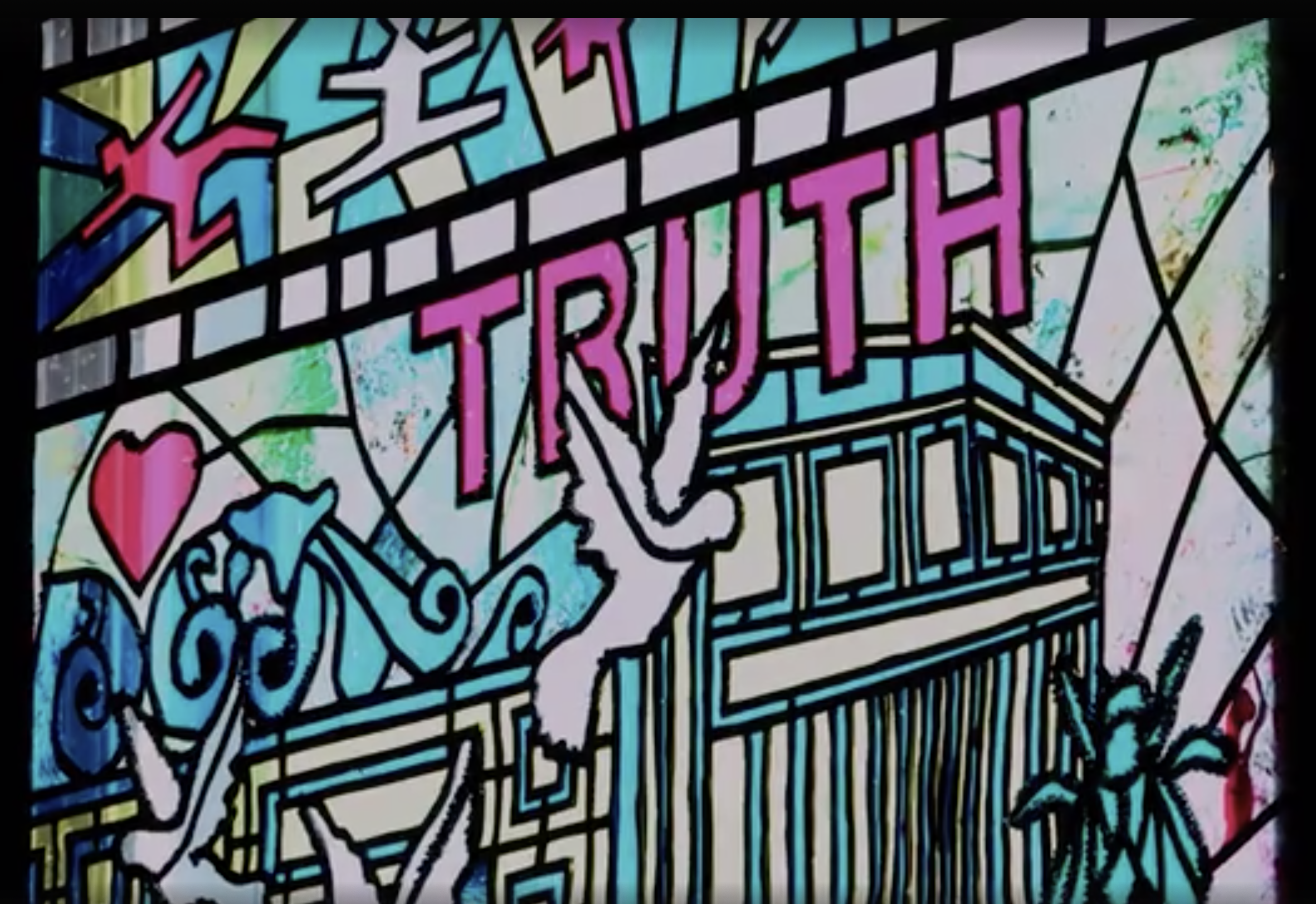
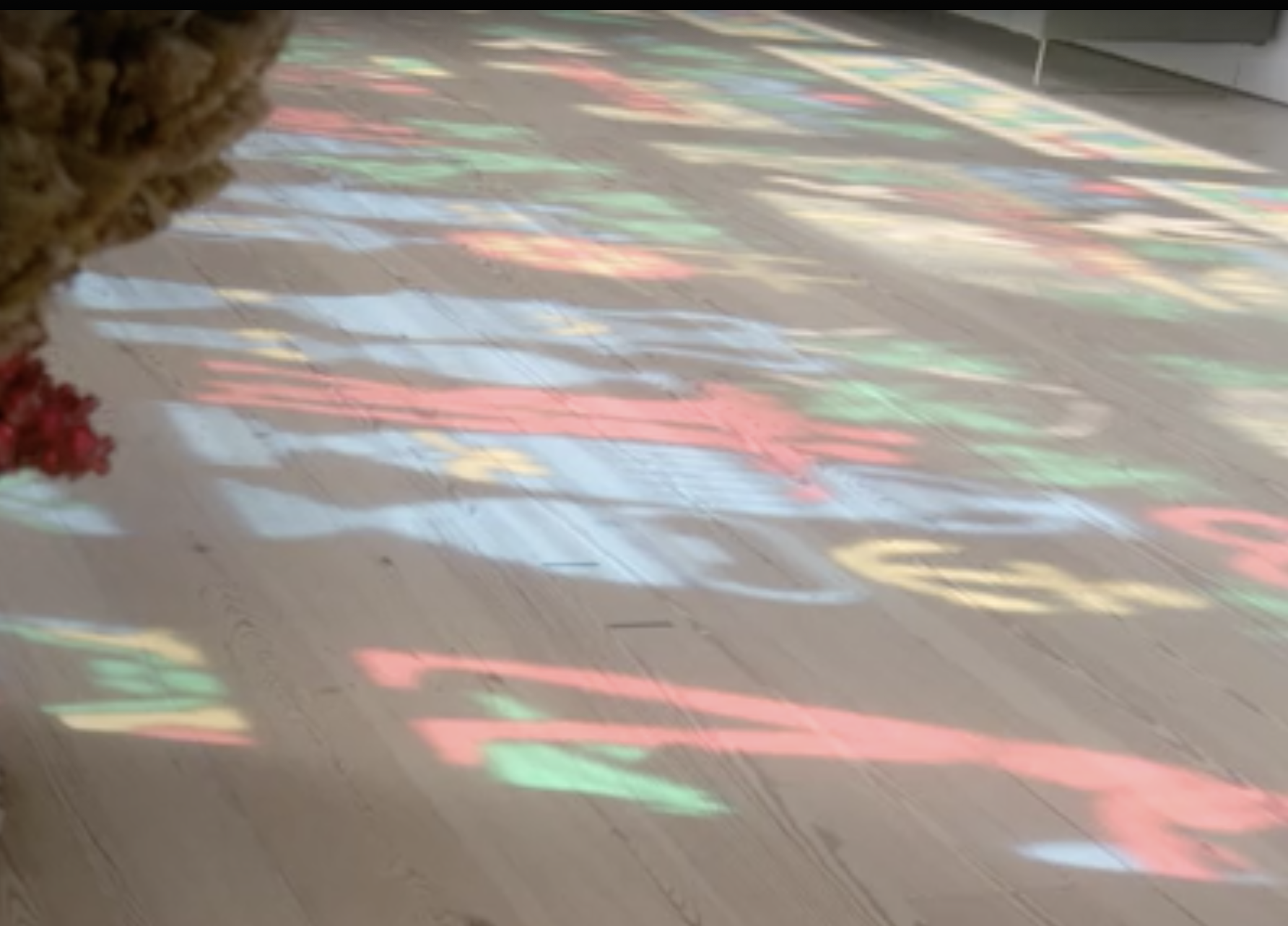
This vibrant mural is made from sheets of colored acetate with tape, not stained glass. de Nieves visually references stained glass in two ways. The first is with translucent materials which allow light to shine through. Second, the mural is formatted like traditional stained glass in churches, with 18 panels telling a story. Standing in this exhibit would feel like being in a cathedral with all the light and colors projecting around you.
Aligning with the tradition of stained glass, de Nieves’ panels tell a story of the journey to a “better tomorrow.” In the first panel we see a sick person and images of personal struggle and self-doubt. In the following panels the figure reaches out for help and fails. The message of failure is important here because de Nieves wanted this to be a realistic story, and struggle is a fundamental part of life. The story culminates in a celebration of life, which we see as people dancing and making pottery. Though fear and failure are very prominent in this work they are balanced with the words: peace, love, truth, justice, harmony and hope. de Nieves includes one of these words in each column of panels to show that good and bad coexist.
de Nieves’ contribution to the 2017 Whitney Biennial is art with reference to craft. To de Nieves the final product is more important than process, so he was able to achieve the appearance of stained glass with much cheaper and easier to work with materials. Cauleen Smith and Rafa Esparza also have work in this show focused on storytelling. de Nieves’ mural is low in importance of process and practicality, so this work is closer to the fine-art end of the spectrum like Matt Browning’s work.